Companies news
Australia and the EU Strike a Landmark Free Trade Agreement
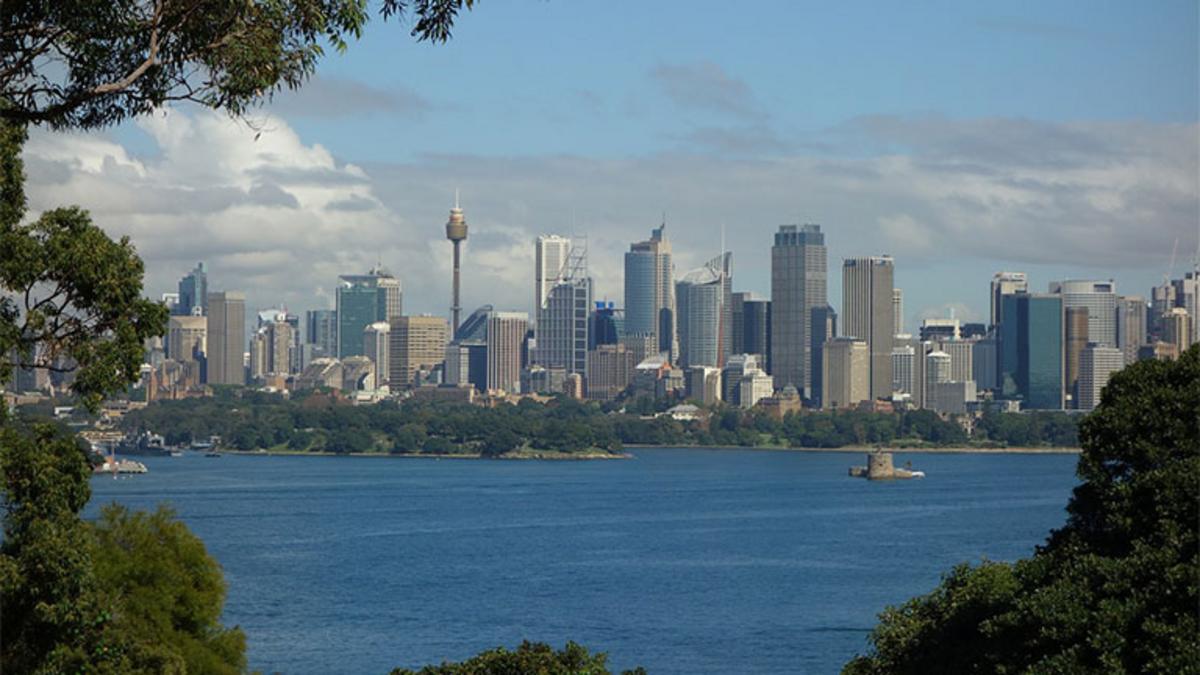
On 24 March 2026, Australia and the EU announced the conclusion of a landmark Free Trade Agreement, strengthening economic ties.
On 24 March 2026, Prime Minister Anthony Albanese and European Commission President Ursula von der Leyen announced the conclusion of the Australia–European Union Free Trade Agreement (FTA). This deal, 8 years in the making, will reshape the commercial landscape between both our economies. In practical terms, the EU–Australia FTA will offer:
- Near-total tariff elimination
- New opportunities in major public procurement markets
- A stable, rules-based environment for long-term investment
- More resilient and diversified supply chains
- Easier movement of talent and access to services markets
Whether you are based in France seeking to enter the Australian market, or in Australia looking to unlock opportunities across Europe, FACCI is here to help you navigate and capitalise on the tangible business opportunities created by this agreement.
“The EU and Australia may be geographically far apart, but we couldn’t be closer in terms of how we see the world.” Ursula von der Leyen, President of the European Commission
Why This Deal Matters for You
The agreement represents a unique opportunity to scale, connect, and lead between Australia and Europe.
What it means if you’re a French company
This deal is making Australia an even more attractive environment for long-term business expansion, with its stable economy, consistent GDP growth and strong population dynamics. It solidifies it as a strategic base to expand into the Indo-Pacific region. For French companies operating in Australia, this agreement should make it easier to export products into Australia at lower cost. It is expected to deliver up to $1,66 billion [1] in annual duty savings for EU exporters with EU exports projected to increase of 33% over the next decade (European Commission, 2026). The agreement is expected to boost investment flows, simplify business frameworks, and drive demand for European expertise, particularly in sectors such as infrastructure, energy transition, luxury, and advanced technologies. It will include dedicated provisions for small and medium-sized enterprises, improving access to market information, simplifying procedures, and making it easier to navigate regulatory requirements.
What it means if you’re an Australian company
For Australian companies trying to scale internationally or looking for new revenue streams, this agreement should significantly lower the barriers to doing business in Europe. With most exports entering the EU duty-free and broader access to services and public procurement, businesses should be able to compete on fairer terms. It will open the door to 450 million consumers (Australian Government, 2026), enable partnerships with European leaders, and reduce regulatory friction when expanding overseas.
Sector-by-sector: What it means for your industry
Aerospace, Defence & Aviation
The FTA is paired with a formal Security and Defence Partnership that will help reinforce broader strategic cooperation in the defence industry, counterterrorism, space and maritime security. This should create a durable institutional framework for joint ventures and procurement collaboration between French and Australian defence companies. Australian companies will gain new access to bid on EU government contracts worth around $845 billion annually (Australian Government, 2026), including defence-adjacent infrastructure.
Banking & Financial Services
The EU is already Australia’s second largest source of foreign investment, with a stock of approximately $869 billion (Australian Government, 2026), and the agreement is expected to strengthen long-term capital flows and cross-border expansion. Australian financial services providers will gain access to EU markets while French financial institutions operating in Australia will benefit from a more stable and predictable investment environment.
Energy & Resources
This deal should lead to stronger EU–Australia cooperation on energy transition and supply chains. EU tariffs on Australian critical minerals and hydrogen will be eliminated. French energy companies (nuclear, hydrogen, renewables) will have a more secure and transparent pathway to source from Australian critical mineral supply chains. Beyond market access, the agreement embeds legally binding sustainability commitments, including alignment with the Paris Climate Agreement and the liberalisation of trade in green goods and services.
Luxury & Retail
European wine, spirits, chocolates, biscuits, pasta but also textiles, clothing and footwear will become more affordable as up to 99% of Australian import tariffs will be removed (European Commission, 2026). For French luxury and premium consumer goods brands, this will be a direct boost to price competitiveness in the Australian market. The agreement also preserves certain naming rights and ensures a balanced approach to geographical indications (e.g. continued use of “Prosecco” domestically for a limited time). In parallel, stronger intellectual property protections will help prevent counterfeiting and other infringements, supporting brand integrity.
Digital, AI & Cybersecurity
The agreement will boost collaboration across innovation, digital, and research sectors, facilitating international scaling for French and Australian tech companies. It will introduce rules on cross-border data flows and remove data localisation requirements to make international operations more practical for digital businesses. Combined with stronger intellectual property protections, these provisions will support innovation, scalability, and the growth of digital businesses across both markets.
Transport & Infrastructure
Australian companies, including SMEs, will have access to EU government procurement contracts worth around $845 billion annually (Australian Government, 2026), explicitly including rail and construction. The agreement is also set to improve access in maritime transport services to facilitate trade and logistics between both regions. For French infrastructure and engineering firms operating in Australia, the agreement will support a more predictable and transparent investment environment. At the same time, reduced tariffs on European machinery and motor vehicles will help lower capital expenditure for infrastructure development.
What Happens Next?
While the agreement will simplify how businesses operate across borders, it has not yet entered into force and must complete formal ratification in both Australia and the EU. This will take time. This means now is the time for businesses to anticipate and prepare.
FACCI supports companies in turning this agreement into concrete business outcomes. Through our ecosystem and services, we can:
- Provide market insights and sector-specific briefings to identify the most relevant opportunities
- Facilitate strategic introductions and connections with trusted members across France, Australia, and Europe
- Support market entry and expansion strategies, including positioning and business development
- Offer visibility opportunities through our events, media channels, and member network
- Deliver practical business services such as translation, interpretation, recruitment and hot desk
A Milestone for French Australian Business
As the leading French Australian business network in Australia, representing over 500 members nationwide, this agreement delivers what we have long advocated for: a stable foundation to grow business between Australia and Europe.
The French Australian Chamber of Commerce and Industry has been connecting businesses across both countries since 1899, supporting the evolution of what is now a strong and dynamic economic partnership. This FTA opens a new chapter, unlocking concrete opportunities across aerospace, energy, luxury, finance, and infrastructure sectors, and giving our members new ways to expand and connect on a global stage.
To fully leverage these opportunities and connect with a powerful Franco-Australian business network:
Sources:
- Australian Government (2026), Australia–European Union Free Trade Agreement, Prime Minister of Australia. Available at: https://www.pm.gov.au/media/australia-european-union-free-trade-agreement Accessed: 24 March 2026).
- European Commission (2026), The EU–Australia trade agreement, European Commission. Available at: https://commission.europa.eu/topics/trade/eu-australia-trade-agreement_en (Accessed: 25 March 2026).
[1] €1 billion (equivalent to approximately AUD 1.66 billion, based on indicative exchange rates from European Central Bank in March 2026).